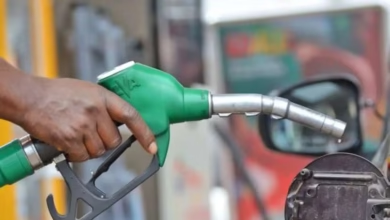
International ratings agency Fitch Ratings says the Ghanaian government may extend the temporary fuel relief measures introduced to cushion consumers from rising petroleum prices if the fiscal burden remains manageable.
The projection was contained in Fitch’s latest assessment report on Ghana, where the agency upgraded Ghana’s Long-Term Foreign-Currency Issuer Default Rating from ‘B-’ to ‘B’ with a Positive Outlook.

According to Fitch, the government could maintain the intervention if the cost stays below 0.1% of GDP per month and can be balanced with savings in other areas of expenditure.
Background to the Fuel Relief Measures
On April 16, 2026, the government announced temporary subsidies on fuel products to reduce the impact of rising global crude oil prices on consumers and businesses.
Under the intervention:
Government absorbed GH¢2 per litre on diesel
Government also absorbed GH¢0.36 per litre on petrol
The policy was introduced as a one-month emergency measure and is expected to expire on May 16, 2026.
Government explained at the time that the intervention was necessary to stabilise fuel prices, transportation costs, and inflationary pressures caused by developments on the international oil market.
Rising Global Oil Prices
Fitch noted that crude oil prices have begun increasing again following geopolitical tensions linked to developments involving the United States and Iran.
Brent crude oil prices are reportedly hovering around $105 per barrel, creating renewed pressure on fuel-importing countries such as Ghana.
Industry projections indicate that fuel prices in Ghana could rise again from May 16 if global price increases continue.
Current estimates suggest:
Petrol prices may increase slightly
Diesel prices could rise by nearly 6.77%
LPG prices may rise between 7.24% and 10.41%
Analysts say the LPG increase reflects delayed adjustments from previous international price hikes.
Inflation and Economic Outlook
Fitch expects inflation to rise gradually later in the year because of higher fuel and energy costs. However, the agency still believes inflation will continue declining overall through 2026 and 2027.
The report also projected that the Bank of Ghana would remain cautious with interest rate decisions to prevent inflation from rising sharply again.
According to Fitch, Ghana’s public debt is expected to decline further to 46% of GDP by 2027, supported by fiscal discipline and the strengthening of the cedi.
The agency also forecasts strong economic growth averaging 5% through 2027, driven by:
Gold exports
Improved consumer confidence
Lower inflation
Reduced borrowing costs
Fitch further expects Ghana’s current account surplus to remain strong due to continued high gold prices on the international market.